
Kenniscentrum
Tailor-made sustainable packaging for Elanco
Elanco is a thoroughly Belgian company. In fact, every garment is made entirely in-house, and has been since 1945. Elanco combines this minimal carbon footprint with production on demand. No surpluses here, but a sustainable approach woven into the entire operation. Because even the packaging has been sustainable since 2022.
We talked about this with Peter Haenebalcke, responsible for purchasing and sales. He heads Elanco together with his sister Liesbeth. For Peter, the collaboration with Marisan already tastes like more thanks to the shared vision of sustainability.
A partnership for 2022-2023
How did you come into contact with Marisan?
“Just before corona, we were not neighbours at a sustainability fair. We were there with our shirts made from 100% recycled material, they were there with sustainable packaging. Back then, we actually had a good conversation about a possible cooperation, but during the volatile corona years, this remained on hold. In early 2022, we picked up the thread.”
Meeting at a sustainability fair can hardly be a coincidence …
“We both find sustainability very important. Elanco was actually already sustainable avant la lettre. Our ecological footprint is minimal because we make everything in Belgium and we only produce what has been sold. So we have no stock, but no surpluses either. Moreover, in recent years we have been trying to use recycled materials as much as possible.”
A tailor-made solution
What challenge was Marisan able to help with?
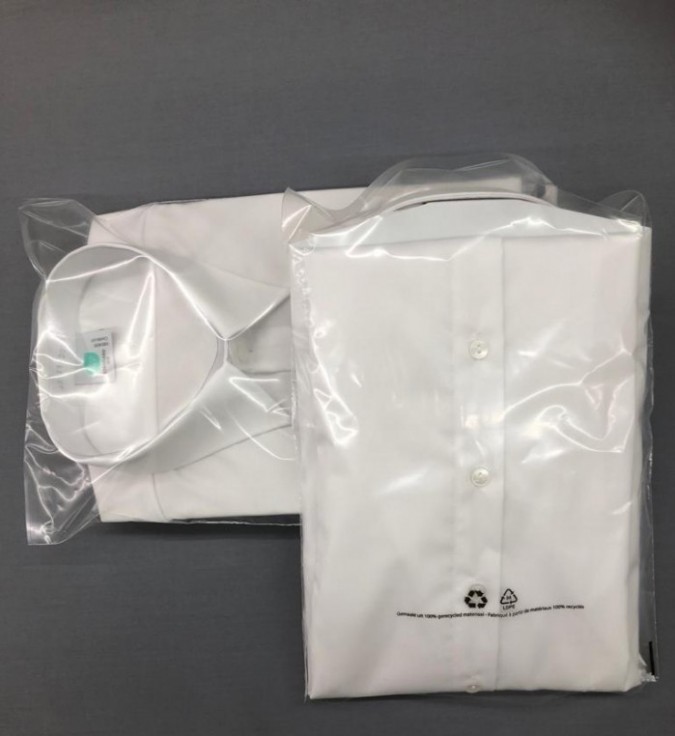
“For a government order, shirts had to be packed in a bag with specific dimensions, closed with a flap. This allows the packaging to be opened and resealed several times. With an adhesive strip, this is not the case. In addition, the flap also allows air to enter the clothing, which means the colour is better preserved during the customer’s storage period. Marisan provided the perfect tailor-made solution for this: a PE bag with flap.”
How did you experience working with Marisan?
“Marisan created packaging that met all our customer’s requirements, from the flap to the specific format. We are also on the same track in terms of vision. We both not only try to make a good product, but also always look for sustainable ways to do so.”
What will the future bring?
Finally, a look at the future: is it sustainable?
“It is by all means our ambition to work even more sustainably in the coming years, but sustainability remains a roadmap. That’s why we want to check with Marisan for every purchase to see what can be even better and more sustainable compared to the previous packaging.”
A great resolution to conclude with. Thanks!
Explore further
Mono-material packaging: ready for the new recycling regulations
Knowledge Centre Mono-material packaging: ready for the new recycling regulations The packaging industry is on the brink of a major transformation. With the introduction of the Packaging and Packaging Waste Regulation (PPWR), the requirements for recyclability are becoming increasingly stringent. Packaging must not only be recyclable but also easy to process within existing recycling streams. […]
Read moreWhich packaging solutions are most suitable for frozen products?
Blog
Knowledge centre Which packaging solutions are most suitable for frozen products? Frozen products place high demands on their packaging. Not only must packaging withstand temperatures well below freezing, it must also protect against moisture, freezer burn, oxygen exposure and damage during transport. Packaging that does not perform optimally can affect product quality and shorten shelf […]
Read moreLegal requirements for shipping bags: what do shippers and webshops need to know?
Blog
Packaging regulations are evolving rapidly. For webshops, logistics companies and businesses that ship parcels every day, it is becoming increasingly important to use packaging correctly, efficiently and sustainably ...
Read moreThermal vs. thermal transfer labels: what’s the difference and which should you choose?
Blog
In the world of labelling and label printing, you’ll quickly encounter two key printing techniques: direct thermal printing and thermal transfer printing. Although they may seem similar at first glance, they differ ...
Read moreReusable carrier bags are conquering the high street again
Blog
Reusable carrier bags have become an increasingly common sight in the streets. From cotton tote bags to sturdy jute bags, customers use them for groceries, work or a day of shopping.
Read morePaper carrier bags in a new look: bamboo
Nieuws
The world of packaging never stands still. At Marisan, we are constantly exploring new materials and solutions that align with the evolving expectations ...
Read moreTextile labels: legally required and an opportunity to let your brand speak
Blog
Textile labels are more than small pieces of fabric. They are used across many sectors, including textiles, healthcare and logistics, and are often integrated early in the production and sales process ...
Read moreZéfal runs on efficiency with an IndES module from Marisan
Case
Attachments may seem like a small part of a product, but in an industrial production environment they make a world of difference ...
Read morePackaging in three layers: what you need to know about primary, secondary and tertiary packaging
Blog
Packaging is more than just putting a product in a box. Behind every item lies a smart, three-layer structure ...
Read moreEfficient Inventory Management? Discover How Marisan Supports You from Label to Pallet
Blog
A well-organized inventory system involves more than just stacking boxes. It requires smart labeling, reliable packaging, and secure shipping. At Marisan ...
Read more