

Knowledge centre
Make your labels medical proof and trust in them !
The need for reliable labeling solutions
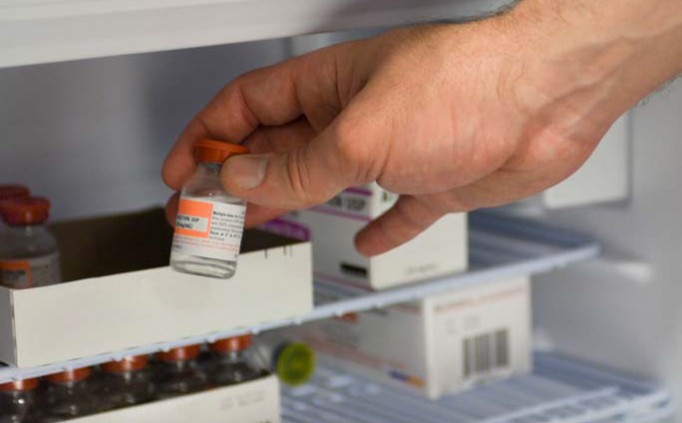
According to the US National Library of Medicine, nearly 25% of all medication errors are related to misunderstanding the drug’s name, and more than 33% of errors are attributed to packaging and labeling confusion. Given that many drugs have similar names due to their composition and constituents, medical professionals have cited a lack of differentiation and labeling as the primary cause of the error.
According to a study titled ‘Preventing Medication Errors’ conducted by the’ Institute of Medicine of the National Academies’, there are more than 1.5 million preventable adverse drug experiences in the US each year. For us too, it is important to use the correct labeling to avoid such experiences. The still too high number of avoidable errors is leading to the demand for accurate labeling of medicines and medical products in healthcare facilities and laboratories.
Labels as a reliable source of information
For commercial companies, the right label can mean the difference between making a profit or a loss. This is no different for companies in the medical sector, in most cases it will mean the difference between correct or incorrect use of a medicine or medical product.
Labels may contain details of the product or medical sample such as batch number, date of manufacture and expiration date, etc. to serve as a reliable source of information for the patient and medical professional. In the pharmaceutical industry, each drug has different properties such as dosage form and drug delivery methods, requiring label design to be adapted to those requirements.
Using the wrong material for labeling can cause this important information to be lost.
Things to consider when choosing labels
Below are some key points to consider when choosing an appropriate label.
- guarantee the legibility of your label throughout the entire process;
- adapt the label to the size of your product;
- meet extreme storage and holding conditions;
- follow the regulations closely;
- …
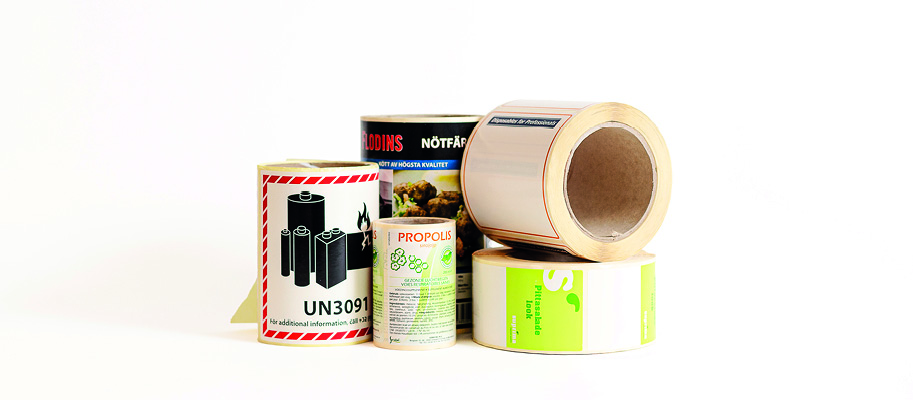
In addition to the above points of attention, you should also consider the right type of glue. Which type of glue is suitable for you, of course, depends on the application. For example, the surface on which you wish to stick the label often requires an extra strong or less strong type of glue.
Add security and usability
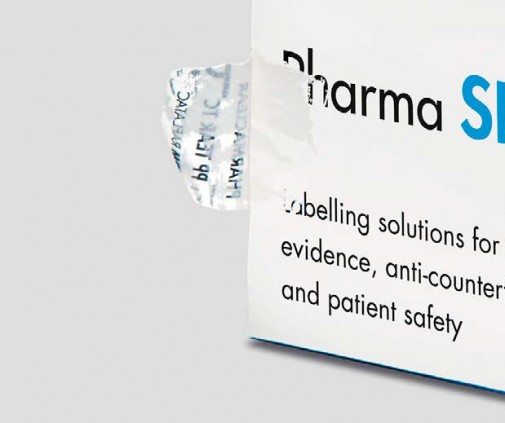
Finally, in addition to the mandatory information labels are expected to add value by providing usability and product safety. The pharmaceutical and medical market, like many other markets, is also subject to counterfeit products. Attach security seals to your products and prove whether or not your product has been tampered with. The added value of these stamps? When removed, these security seals cause damage to your packaging. This way it is clear to your patients & employees at a glance whether or not it is an authentic product.
Related products
Explore further
Mono-material packaging: ready for the new recycling regulations
Blog
The packaging industry is on the brink of a major transformation. With the introduction of the Packaging and Packaging Waste Regulation (PPWR), the requirements for recyclability are becoming increasingly stringent ...
Read moreWhich packaging solutions are most suitable for frozen products?
Blog
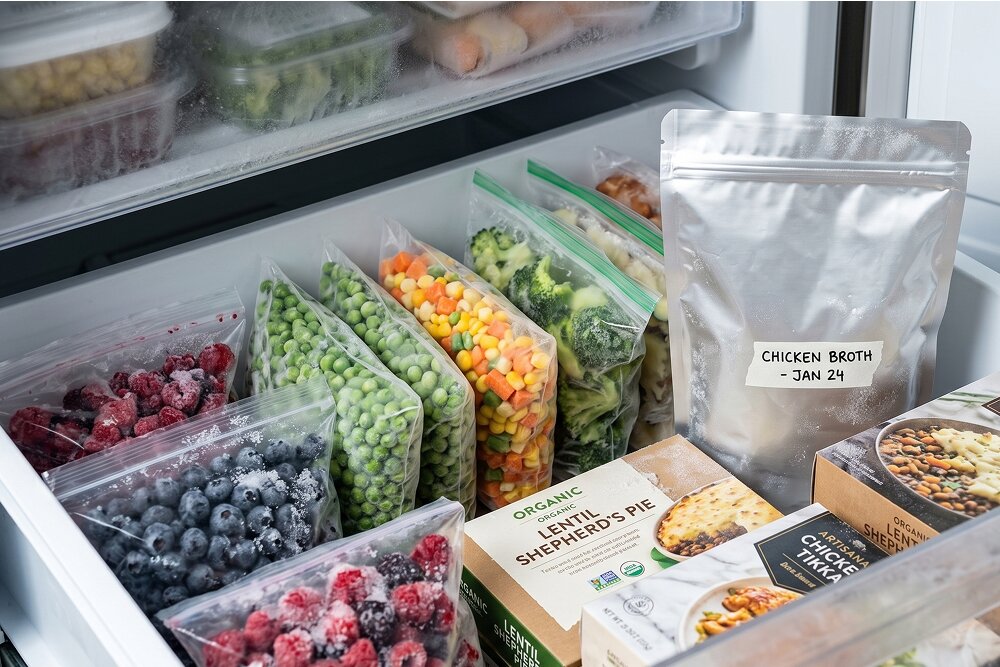
Frozen products place high demands on their packaging. Not only must packaging withstand temperatures well below freezing, it must also protect against moisture, freezer burn ...
Read moreLegal requirements for shipping bags: what do shippers and webshops need to know?
Blog
Packaging regulations are evolving rapidly. For webshops, logistics companies and businesses that ship parcels every day, it is becoming increasingly important to use packaging correctly, efficiently and sustainably ...
Read moreThermal vs. thermal transfer labels: what’s the difference and which should you choose?
Blog
In the world of labelling and label printing, you’ll quickly encounter two key printing techniques: direct thermal printing and thermal transfer printing. Although they may seem similar at first glance, they differ ...
Read moreReusable carrier bags are conquering the high street again
Blog
Reusable carrier bags have become an increasingly common sight in the streets. From cotton tote bags to sturdy jute bags, customers use them for groceries, work or a day of shopping.
Read morePaper carrier bags in a new look: bamboo
Nieuws
The world of packaging never stands still. At Marisan, we are constantly exploring new materials and solutions that align with the evolving expectations ...
Read moreTextile labels: legally required and an opportunity to let your brand speak
Blog
Textile labels are more than small pieces of fabric. They are used across many sectors, including textiles, healthcare and logistics, and are often integrated early in the production and sales process ...
Read moreZéfal runs on efficiency with an IndES module from Marisan
Case
Attachments may seem like a small part of a product, but in an industrial production environment they make a world of difference ...
Read morePackaging in three layers: what you need to know about primary, secondary and tertiary packaging
Blog
Packaging is more than just putting a product in a box. Behind every item lies a smart, three-layer structure ...
Read moreEfficient Inventory Management? Discover How Marisan Supports You from Label to Pallet
Blog
A well-organized inventory system involves more than just stacking boxes. It requires smart labeling, reliable packaging, and secure shipping. At Marisan ...
Read more