


Knowledge centre
Everything you need to know about circular buying
Circular procurement in a nutshell
With circular procurement, you take an important step in sustainable business. You not only pay attention to the positive ecological, social and economic impact of the purchase, but also actively work to avoid a negative environmental impact. You do this by closing the energy and material loop throughout the supply chain.
The ambition map as a guide
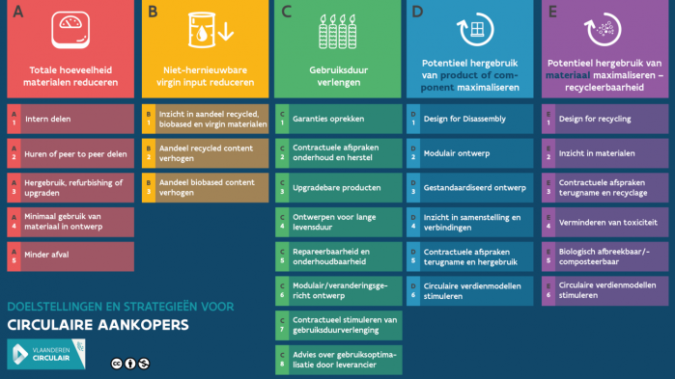
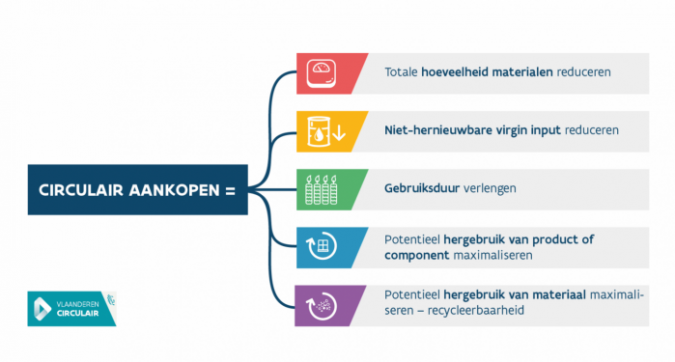
Flanders Circular created an ambition map as a tool to get started towards circular procurement. The map includes five circular objectives that can serve as a basis for your circular procurement project.
- Reduce the total quantity of materials
- Reduce non-renewable virgin input
- Extend useful life
- Maximise potential reuse of products or components
- Maximise potential reuse of material – recyclability
Each of the five objectives contains a number of strategies you can employ. Together, these choices determine your ambition level for circular procurement.
Stronger together
By purchasing circularly, you respond to the evolving functional needs of users within an organisation. In addition, a circular purchasing process also stimulates cooperation between all parties involved in the purchasing chain. The common mission: to preserve the maximum value of products and materials via an optimally closed loop. As a packaging partner, Marisan is of course happy to help with this!
Circular purchasing in seven steps (1 – 2 – 3)
A circular purchasing process shows quite a few similarities to classic purchasing. Nevertheless, the preparation – especially the first times – can take some extra time. But rest assured, this pays off in the long run. We would like to explain the seven steps of circular purchasing.
1. Circular need
Dare to critically examine the purchase need. Is the purchase really necessary? Make a good inventory of what is already present in the company so that you can (re)use those items to the maximum. Also distinguish between needs and requests. Perhaps someone asks for a new office chair, but actually needs more comfortable seating.
2. Circular ambitions
In this step, you determine what circular impact you want to make. The ambition map is a good tool to help you do this. Discussions within the organisation can also be enlightening.
3. Dialogue with the market
Suppliers become partners in the search for circular solutions. Do existing suppliers offer solutions that fit your circular ambition? Or do you need to look for new partners? At Marisan, we already have plenty of circular options.
Circular purchasing in seven steps (4 – 5)
4. Specify and award
Define circular wishes and needs in great detail in a scope. Also include selection criteria, technical specifications and the goals you want to achieve in circular terms. Not an obvious exercise, but one that can pay off handsomely.
5. Use and implementation
Agree on performance, maintenance and lifespan of the product and follow it closely. It is only when the full potential is exploited in (re)use that you can truly call a product circular.
Circular purchasing in seven steps (6 – 7)
6. End-of-use
This is not the same as end-of-life. Perhaps the product can still be repaired or used in another way? When use does stop, it is crucial to maximise the value of the materials for e.g. recycling. Ideally, this is also agreed upon.
7. Evaluate
You have undoubtedly learned a lot! What will you take with you to the next circular purchase? What could be different and what could be better? Discuss this together with all actors. That way, little by little, circularity becomes embedded in your organisation!
Circular packaging
At Marisan, we have been focusing on circularity for a long time. That makes us a suitable partner for your circular purchasing process. We think along with you and are happy to advise you based on our experience! Take a look at our ecological solutions or contact us via info@marisan.be or +32 9 232 06 16 to discuss circular procurement with your company.
Explore further
Mono-material packaging: ready for the new recycling regulations
Knowledge Centre Mono-material packaging: ready for the new recycling regulations The packaging industry is on the brink of a major transformation. With the introduction of the Packaging and Packaging Waste Regulation (PPWR), the requirements for recyclability are becoming increasingly stringent. Packaging must not only be recyclable but also easy to process within existing recycling streams. […]
Read moreWhich packaging solutions are most suitable for frozen products?
Blog
Knowledge centre Which packaging solutions are most suitable for frozen products? Frozen products place high demands on their packaging. Not only must packaging withstand temperatures well below freezing, it must also protect against moisture, freezer burn, oxygen exposure and damage during transport. Packaging that does not perform optimally can affect product quality and shorten shelf […]
Read moreLegal requirements for shipping bags: what do shippers and webshops need to know?
Blog
Packaging regulations are evolving rapidly. For webshops, logistics companies and businesses that ship parcels every day, it is becoming increasingly important to use packaging correctly, efficiently and sustainably ...
Read moreThermal vs. thermal transfer labels: what’s the difference and which should you choose?
Blog
In the world of labelling and label printing, you’ll quickly encounter two key printing techniques: direct thermal printing and thermal transfer printing. Although they may seem similar at first glance, they differ ...
Read moreReusable carrier bags are conquering the high street again
Blog
Reusable carrier bags have become an increasingly common sight in the streets. From cotton tote bags to sturdy jute bags, customers use them for groceries, work or a day of shopping.
Read morePaper carrier bags in a new look: bamboo
Nieuws
The world of packaging never stands still. At Marisan, we are constantly exploring new materials and solutions that align with the evolving expectations ...
Read moreTextile labels: legally required and an opportunity to let your brand speak
Blog
Textile labels are more than small pieces of fabric. They are used across many sectors, including textiles, healthcare and logistics, and are often integrated early in the production and sales process ...
Read moreZéfal runs on efficiency with an IndES module from Marisan
Case
Attachments may seem like a small part of a product, but in an industrial production environment they make a world of difference ...
Read morePackaging in three layers: what you need to know about primary, secondary and tertiary packaging
Blog
Packaging is more than just putting a product in a box. Behind every item lies a smart, three-layer structure ...
Read moreEfficient Inventory Management? Discover How Marisan Supports You from Label to Pallet
Blog
A well-organized inventory system involves more than just stacking boxes. It requires smart labeling, reliable packaging, and secure shipping. At Marisan ...
Read more